Shen Yun & Falun Gong
Falun Gong—also known as Falun Dafa—is an ancient spiritual practice rooted in the principles of Truthfulness, Compassion, and Forbearance. It is this faith that inspires Shen Yun’s artists.
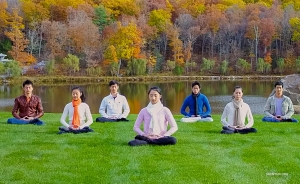
At its core, Falun Gong is a self-improvement discipline. It has five meditative exercises and a body of teachings by Mr. Li Hongzhi that encourage learners to elevate their character and let go of unhealthy attachments.

It is a personal path with no formal institutions, hierarchies, or memberships. Practitioners gather in parks to practice the exercises together and support each other in living by the practice’s principles. It is always taught free of charge and is open to all.
The Principles
Falun Gong’s teachings guide practitioners to attune their lives to the underlying qualities of the universe: Truthfulness, Compassion, and Forbearance, or “to be true, good, and endure.”

A National Phenomenon
Falun Gong is rooted in China’s ancient heritage of Buddhist and Taoist disciplines known as “cultivation” (xiu lian). Its teachings echo thousands of years of Chinese wisdom about the nature of the universe and the path to moral and spiritual refinement.

Long passed down one generation to another from master to disciple, this lineage was adapted for modern life and introduced to the public in 1992 by Mr. Li Hongzhi.
Word traveled quickly. Factory workers and professors, farmers and government officials, elderly and the young—people across China found in the practice something that spoke directly to them. Within a few years, Falun Gong had become one of the most widely practiced disciplines in Chinese history, loved by millions.
By the late ‘90s, the Chinese government estimated that as many as 100 million people were practicing Falun Gong. Health officials noted that it was reducing the burden on the national healthcare system. Falun Gong was officially welcomed, encouraged, and even extolled on state-run television.
Then, in 1999, everything changed.
Persecution
As Falun Gong grew in popularity, Chinese Communist Party (CCP) leader Jiang Zemin grew apprehensive about its widespread appeal and independence from party control. Jiang launched an investigation trying to dig up dirt about the practice, but came up with nothing—no violent act, no subversive agenda. In July 1999, Jiang banned it anyway.

The CCP ordered a nationwide campaign to “eradicate” Falun Gong. The CCP mobilized its full apparatus—state media, security forces, secret police, courts, prisons and labor camps—in a brutal campaign that continues today.
As documented by human rights organizations worldwide, people who refuse to renounce their faith face:
- Abductions and imprisonment without trial, often based on nothing more than possessing a book
- Torture, including sleep deprivation, piercing, electric shock, torture devices, and brutal beatings to death
- Relentless propaganda campaigns designed to demonize Falun Gong practitioners and turn their communities and families against them
- “Reeducation” in brainwashing centers that combine sleep deprivation with Orwellian techniques like watching propaganda videos morning to night
- Forced organ harvesting from living prisoners of conscience, used for sale in China’s transplant industry
- Transnational repression: harassment, surveillance, and threats directed at members of the Falun Gong community living abroad, including Shen Yun performers
And yet, practitioners in China continue to resist peacefully. They print and distribute information about the persecution at great personal risk. They refuse, again and again, to sign statements renouncing their faith. The courage they have shown in the face of overwhelming state power is one of the most extraordinary stories of our time.
And it is one that Shen Yun tells on stage every year.

Artistic Inspiration
Shen Yun was founded in New York in 2006 by a group of Falun Gong practitioners, including artists who fled persecution. They came together with a mission: to use the power of art to breathe life into traditional Chinese culture, and to bear witness to what is happening to people in their homeland.
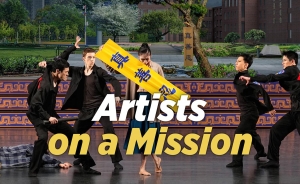
That founding purpose has never changed. Every Shen Yun performance includes a couple of pieces telling the stories of Falun Gong practitioners in China today—told beautifully with classical Chinese dance.
For audiences, these dances are often the most memorable.
To more than 90 Shen Yun artists, the persecution in China is not an abstract human rights concern but a personal wound. Some of them endured imprisonment and torture. Others have parents still detained in China. Some have lost loved ones.
“We’re not trying to convert anyone to our beliefs. What we really want is to stop the persecution in China, bring people hope, and share something that is truly good and uplifting.”
— Regina Dong, Shen Yun Projectionist
In Shen Yun Daily Life
Beyond a human rights issue, Falun Dafa is also the living foundation of Shen Yun’s culture. If you were to visit Shen Yun’s campus in New York’s Hudson Valley, you would find a community shaped at every level by the faith’s principles.
Meditation: Artists often gather to do the Falun Gong exercises together. Before performances, the entire cast sits in stillness backstage, eyes closed, hands folded—a picture of serenity moments before the curtain rises.

Study of Teachings: Falun Dafa’s main book, Zhuan Falun, is a part of daily life at Shen Yun, anchoring the artists in the principles that orient their personal spiritual journey.
“Looking Inside”: A central element of Falun Gong’s self-cultivation is the habit of looking inward at your own self in moments of difficulty—rather than blaming others, asking “where can I improve?”
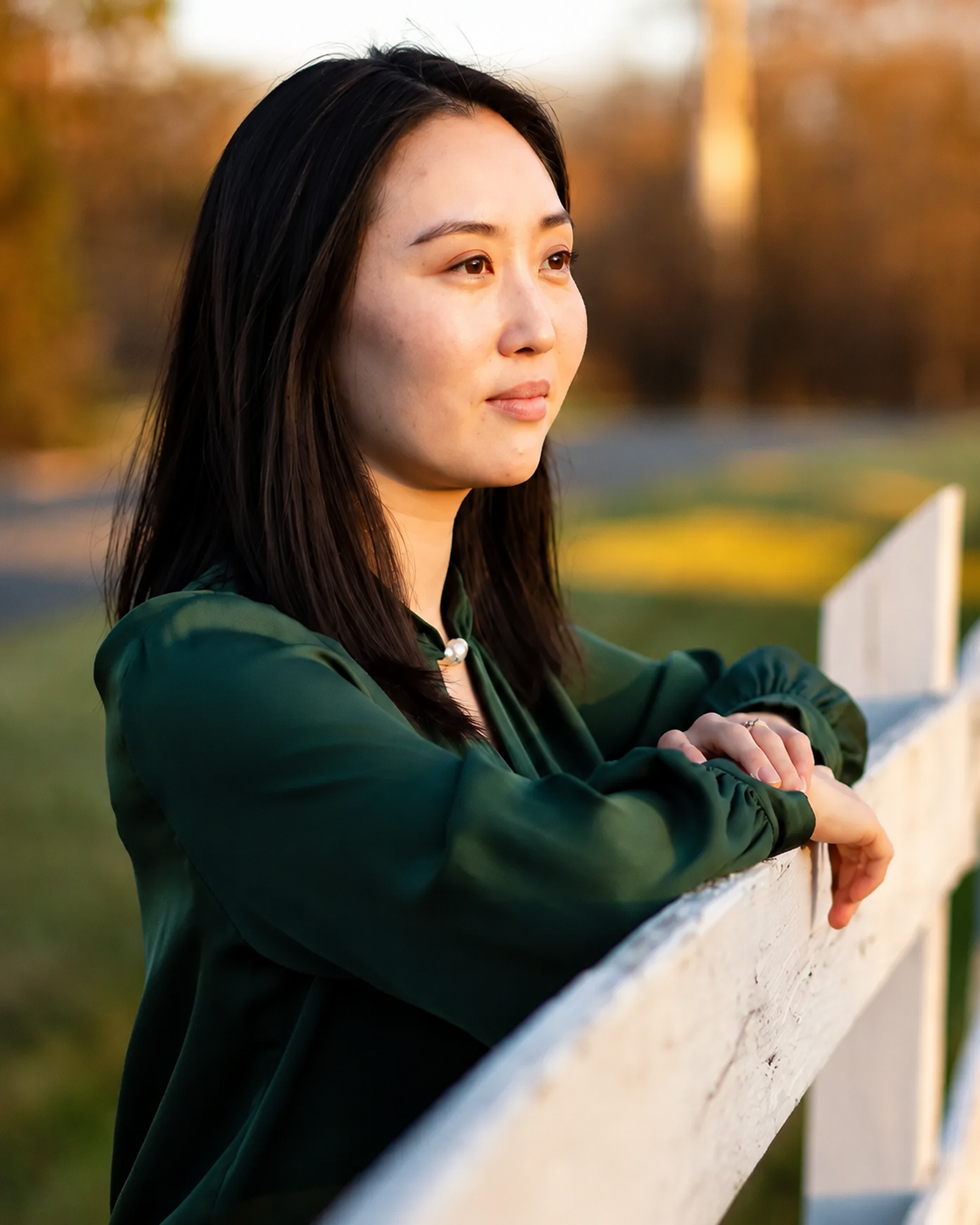
“Because we all try to follow the principles of Truthfulness, Compassion, and Forbearance, and to look inside when we have a problem, it actually makes our life very harmonious. It’s not that we don’t have conflicts, of course we do. And it’s not that we’re perfect—we’re not. It’s that the teachings give us a mechanism and a culture for how to handle conflicts and learn from the process.”
— Alice Liu, Shen Yun Percussionist
Authenticity in Art
The principle of Truthfulness extends into the artistic work itself. Performers strive not just for technical precision but for genuine expression: giving the audience something true and real, rather than a mere spectacle.
The spiritual practice also gives Shen Yun’s artists a framework for the pressures of their professional lives—months on tour, the physical demands of classical Chinese dance at the highest level, the weight of performing for thousands of people night after night. It is not easy.
But for Shen Yun’s performers, their Falun Gong faith teaches that self-cultivation is a process, one that can include trials and overcoming hardships, but is ultimately fulfilling and meaningful.
“Our company is a faith-based organization, and I think our art is better for it. Our spirituality inspires us, we put that in our hearts, and then we try to inspire the audience.”
— Regina Dong, Shen Yun Projectionist
October 30, 2026